The Cathedral in Lucca, officially known as the Duomo di San Martino, is one of the most important religious and artistic landmarks in Tuscany. It’s located in the historic centre of Lucca, and the cathedral includes Romanesque architecture, priceless works of art, and centuries of history all in one place.
This guide explores the origins of the cathedral, its architecture, what to see inside, standout artworks, visitor information, and nearby attractions.
Discover the Cathedral of Lucca
The Cathedral in Lucca is dedicated to Saint Martin of Tours and has served as the city’s main place of worship for nearly a thousand years.
It is within the Piazza San Martino, just a short walk from Lucca’s famous city walls and central squares.
As the seat of the Archbishop of Lucca, the cathedral remains an active place of worship while also welcoming thousands of visitors each year. It is an extremely important site, not only for its religious worship but also for the priceless artworks that are on display.
History and architecture of the Duomo
The current Cathedral in Lucca was founded in 1060 by Bishop Anselm of Baggio, who later became Pope Alexander II. It was consecrated in 1070, although major expansions and decorative additions continued until the 14th century.
The site itself is even older, having housed earlier Christian structures which date back to at least the 6th century. This is an excellent example of Lucca’s long-standing religious significance within Tuscany.
Architectural style
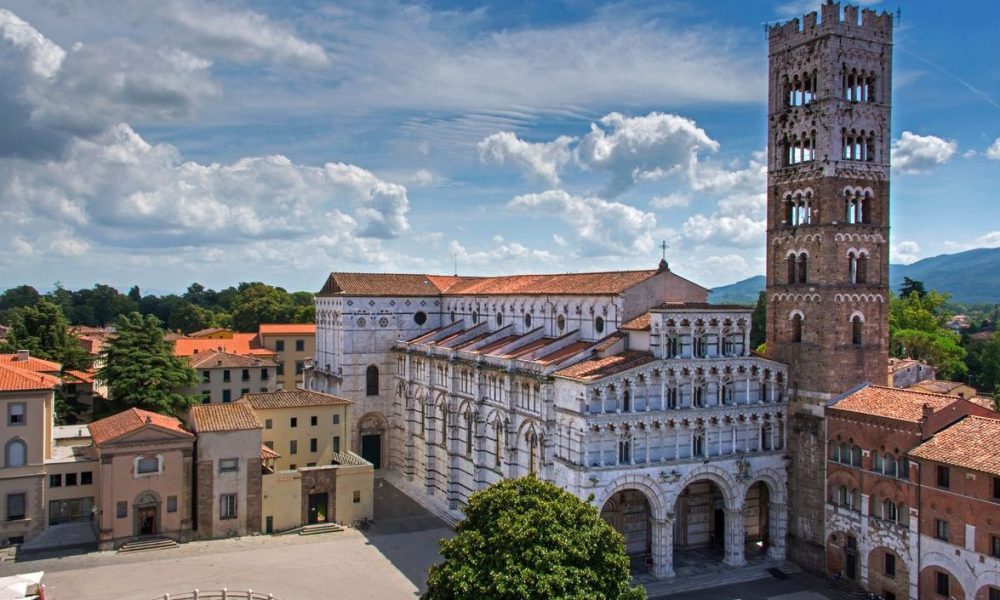
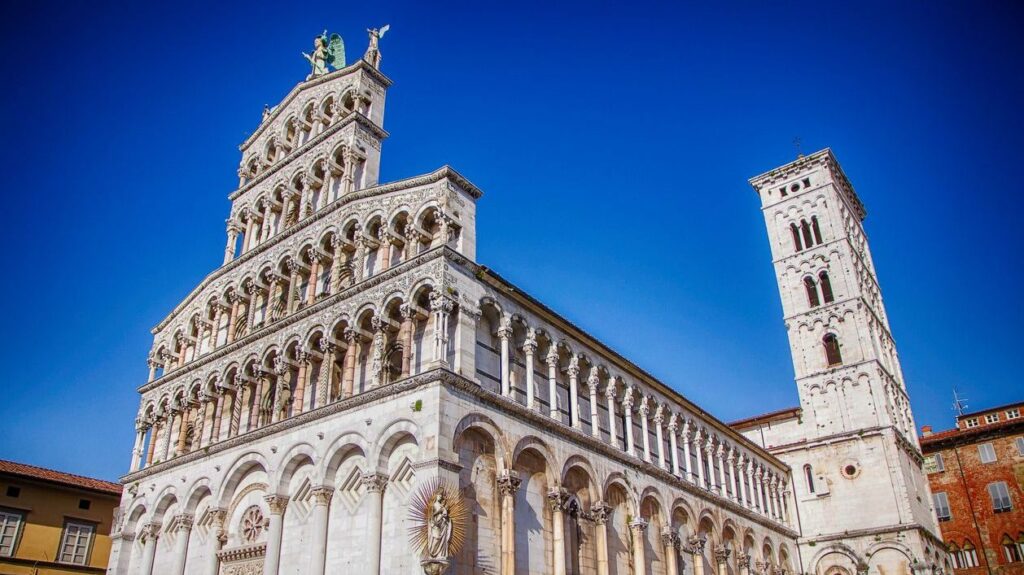
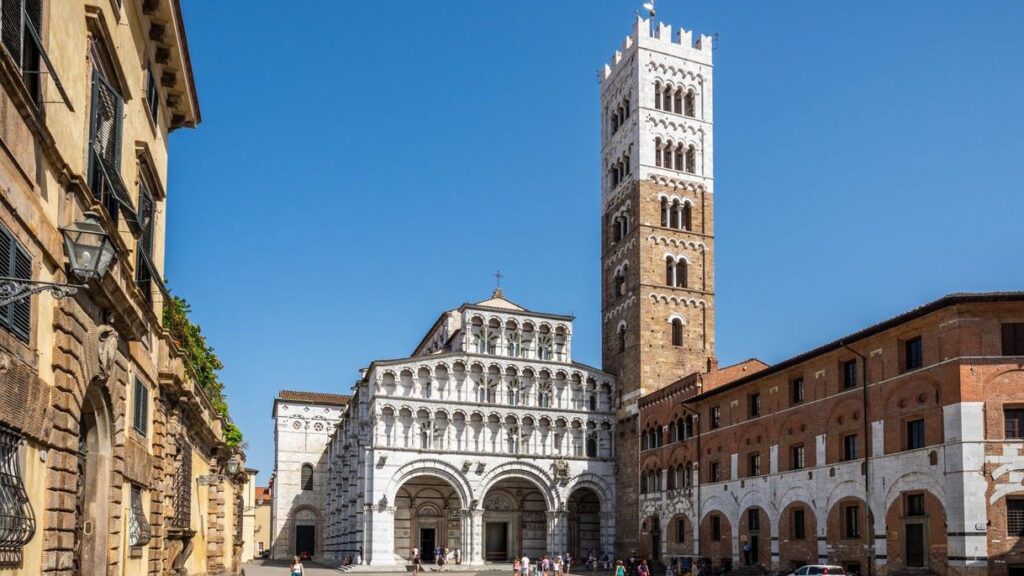
The cathedral is primarily in the Romanesque style, with later Gothic influences added over time. Its asymmetrical façade is one of its most distinctive features and reflects the long construction period.
Key architectural elements include:
- A façade clad in white and grey marble
- A deep portico supported by carved columns, each different in design
- Gothic arches were added during later renovations
- A bell tower rising approximately 60 metres, built partly with stone taken from earlier Roman structures
One unusual detail is the labyrinth carving on a column of the portico. This medieval symbol is associated with pilgrimage and spiritual reflection and is accompanied by a Latin inscription referencing Theseus and the Minotaur.
What will you see inside the cathedral?
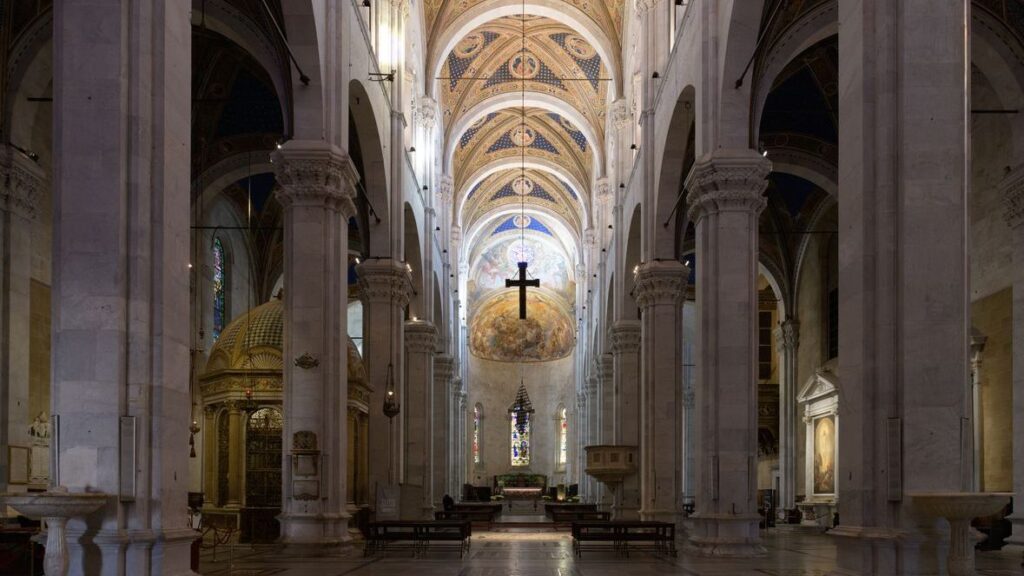
Once you step inside the Cathedral in Lucca, you are hit with a richly decorated interior that contrasts sharply with the exterior.
Inside the cathedral, you are welcomed by a wide nave with marble floors decorated with intricate geometric patterns that immediately set the tone for the space.
As you move through the interior, side chapels showcase a rich collection of Renaissance and Baroque artworks. At the same time, stained glass windows filter natural light into the cathedral, softly illuminating the interior and enhancing its architectural details.
Overall, the atmosphere feels calm and spacious, especially when compared to some of Tuscany’s more crowded cathedrals. As a result, the cathedral’s layout naturally allows you to relax and explore each corner, with artworks thoughtfully distributed across chapels, altars, and the transept.
Notable works and important features of the cathedral
The Cathedral in Lucca is home to some of the city’s most important artistic and religious treasures.
The Volto Santo (Holy Face)
The most revered object in the cathedral is the Volto Santo of Lucca, a wooden crucifix believed to date from between the 8th and 9th centuries. According to legend, it was carved by Nicodemus, who witnessed the Crucifixion.
Regardless of legend, scientific analysis confirms its great antiquity, and it has been a destination for pilgrims for centuries. The Volto Santo still plays a central role in Lucca’s religious festivals, particularly in September.
Tomb of Ilaria del Carretto
Another masterpiece is the tomb of Ilaria del Carretto, sculpted by Jacopo della Quercia in the early 15th century.
This marble sculpture is considered one of the finest funerary monuments of the Italian Renaissance, admired for its delicate realism and emotional restraint.
Paintings and decorative arts
Notable works inside the cathedral include:
- Paintings attributed to Domenico Ghirlandaio
- Works by Tintoretto
- Frescoes, illuminated manuscripts, and liturgical objects are displayed in the adjacent Cathedral Museum
Timetable and tickets
Typical opening hours for the Cathedral in Lucca vary by season.
Spring to early autumn: approximately 9:30 am – 6:00 pm. Winter months usually have shorter opening hours, as the cathedral usually closes mid-afternoon.
Hours may vary on Sundays and during religious services, so we suggest checking locally before planning your visit.
Tickets
There is a small entrance fee for entering the cathedral of €3. You can also purchase a combined ticket granting access to:
- The cathedral
- The Cathedral Museum
- The bell tower
- The baptistery
The combined ticket is €10, and there are special group rate tickets available also.
Practical tips
- Dress modestly (covered shoulders and knees)
- Visit early in the morning for a quieter experience
- Allow at least 45–60 minutes for the cathedral alone
What to visit near the Duomo
The Cathedral in Lucca sits within easy walking distance of several important attractions.
Nearby highlights include:
- Guinigi Tower, famous for its rooftop garden and panoramic views
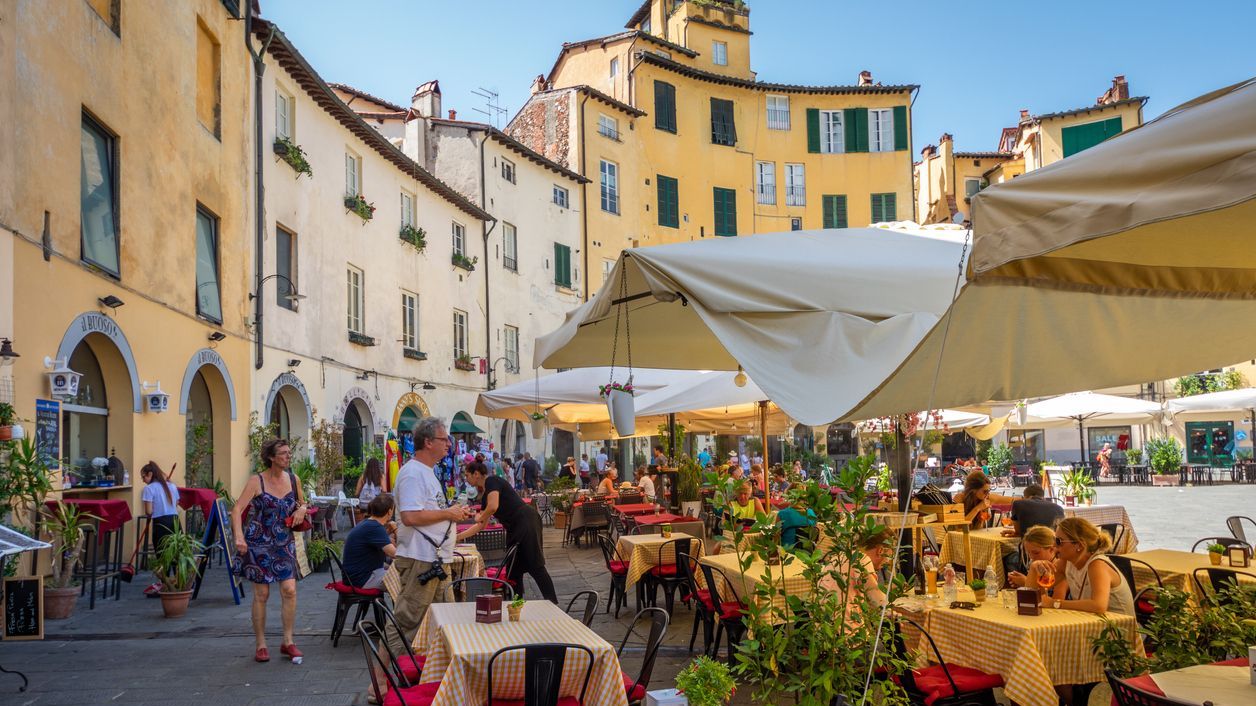
- Piazza dell’Anfiteatro, built on the remains of a Roman amphitheatre
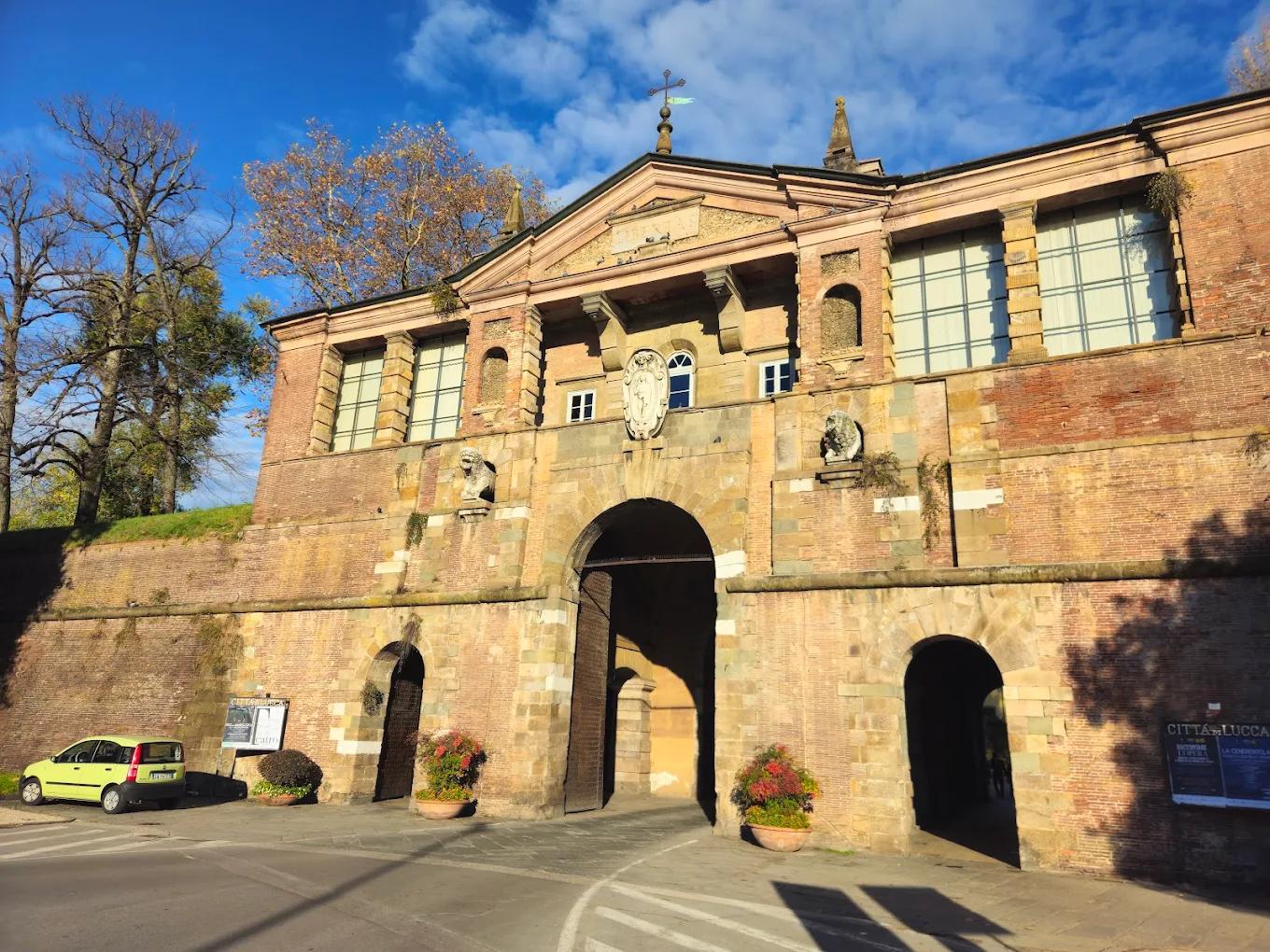
- The Lucca City Walls are ideal for walking or cycling
- You will also find other churches, museums, and traditional cafés scattered throughout the historic centre
This area is compact, making it easy to combine the cathedral with other sights in a single day.
Come and visit Lucca and the Duomo
The Cathedral in Lucca is much more than just a religious building. It is a local monument that reflects the city’s artistic expression, spiritual heritage, and historical depth.
To truly appreciate the cathedral and its surroundings, staying in the historic centre makes all the difference. Lucca Apartments and Villas offer carefully selected accommodation close to the Duomo, allowing you to explore Lucca at a relaxed pace and experience the city beyond the main tourist hours.
Plan your visit, discover the Cathedral in Lucca, and enjoy an authentic stay in one of Tuscany’s most elegant and walkable cities.