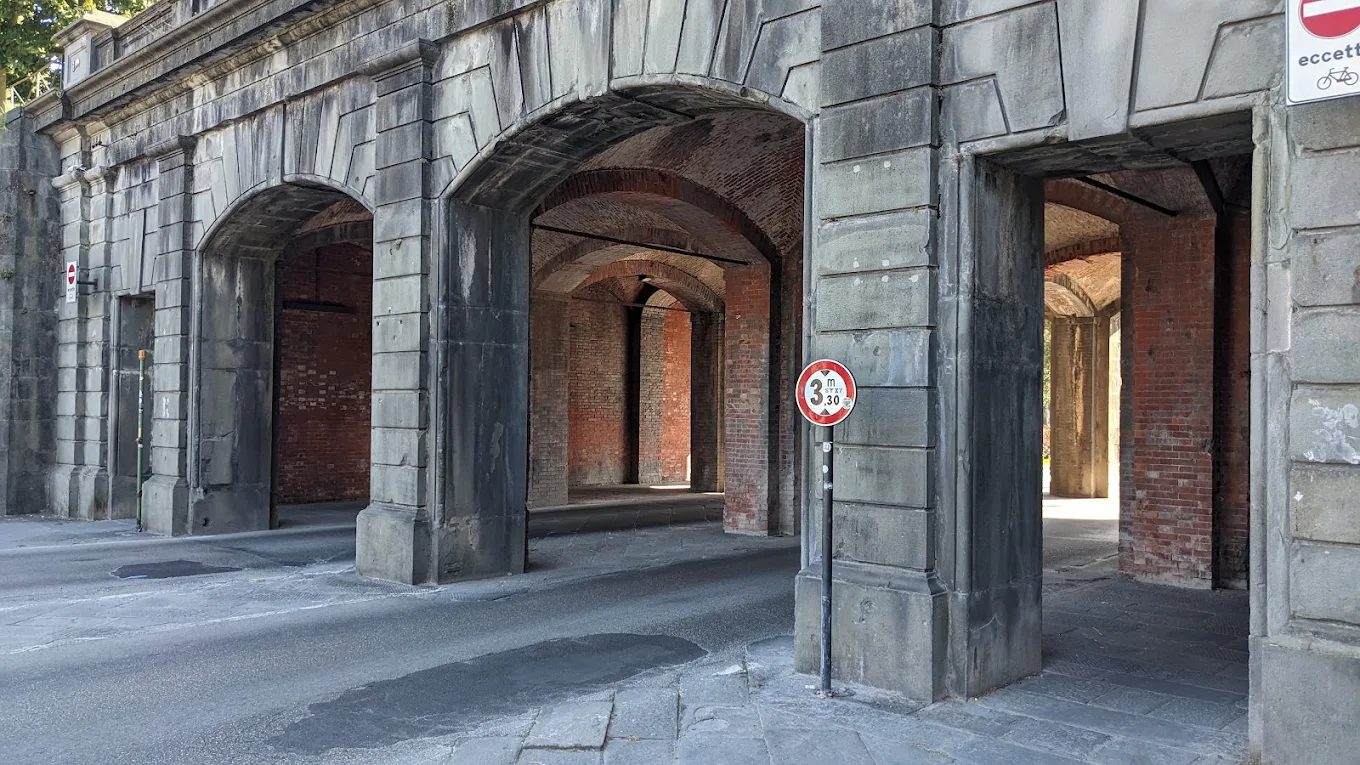
Lucca is one of Tuscany’s most charming and historical cities, known for its Renaissance walls, cobbled streets, and impressive collection of churches. Among these, the Basilica di San Frediano is one of the oldest landmarks in the city.
Located in the heart of Lucca’s historic centre, the Basilica di San Frediano Lucca showcases early Christian origins, Romanesque architecture, and works of art. This guide explores its history, architectural features, must-see artworks, and visiting information.
History and architecture of the Basilica of San Frediano
The Basilica di San Frediano dates back to the 6th century and is closely linked to Saint Frediano, an Irish monk who later became Bishop of Lucca. According to tradition, he founded the original church on this site, making it one of the city’s earliest places of worship.
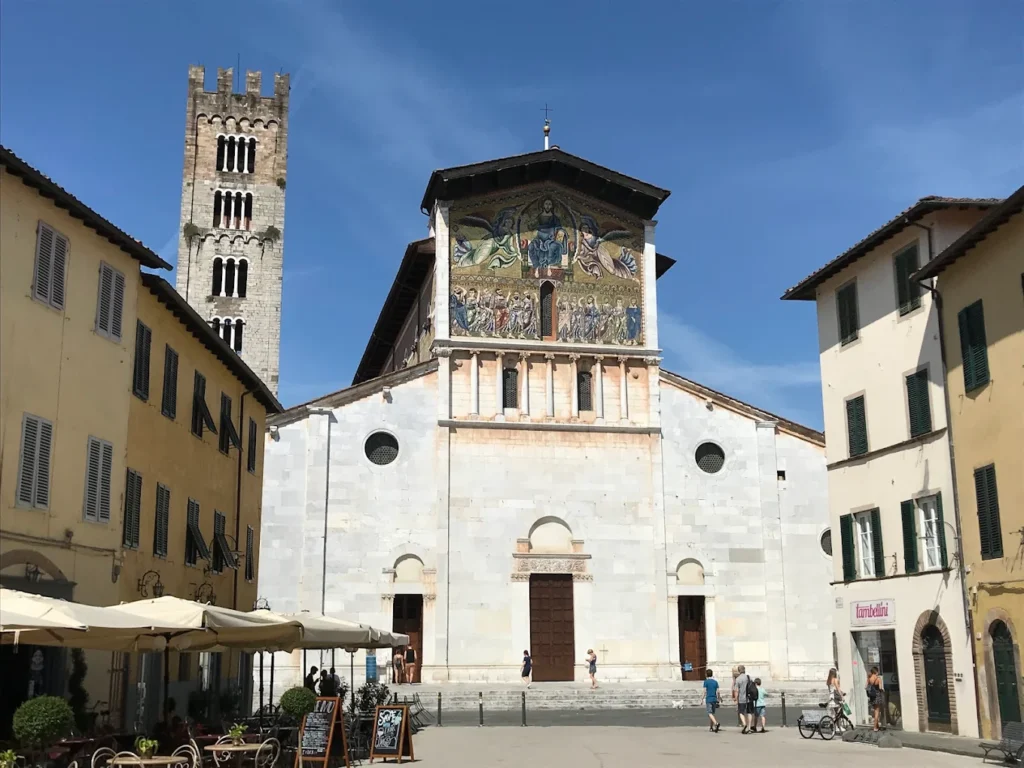
The structure that you see today was largely reconstructed between 1112 and 1147, when the church adopted its distinctive Romanesque style.
Key architectural features
- Golden mosaic façade (13th century): One of the most recognisable features in Lucca, depicting the Ascension of Christ
- Romanesque design: Simple yet monumental, with strong vertical lines
- Raised façade: Unusual orientation, emphasising its visual prominence
- Use of ancient materials: Columns inside the basilica were repurposed from Roman structures
Did you know?
The basilica also played an important role for pilgrims travelling along the Via Francigena, the historic route connecting Canterbury to Rome.
Inside the Basilica of San Frediano
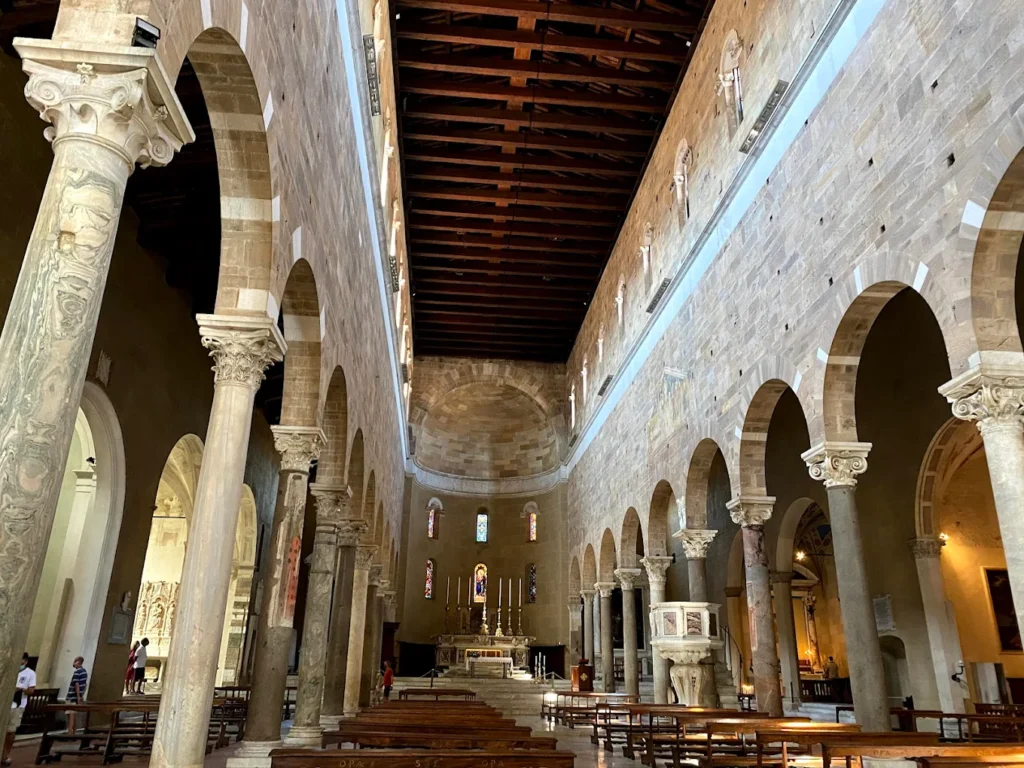
Inside the Basilica di San Frediano Lucca, you are greeted by a beautiful space filled with historical layers and religious significance.
Highlights inside the basilica
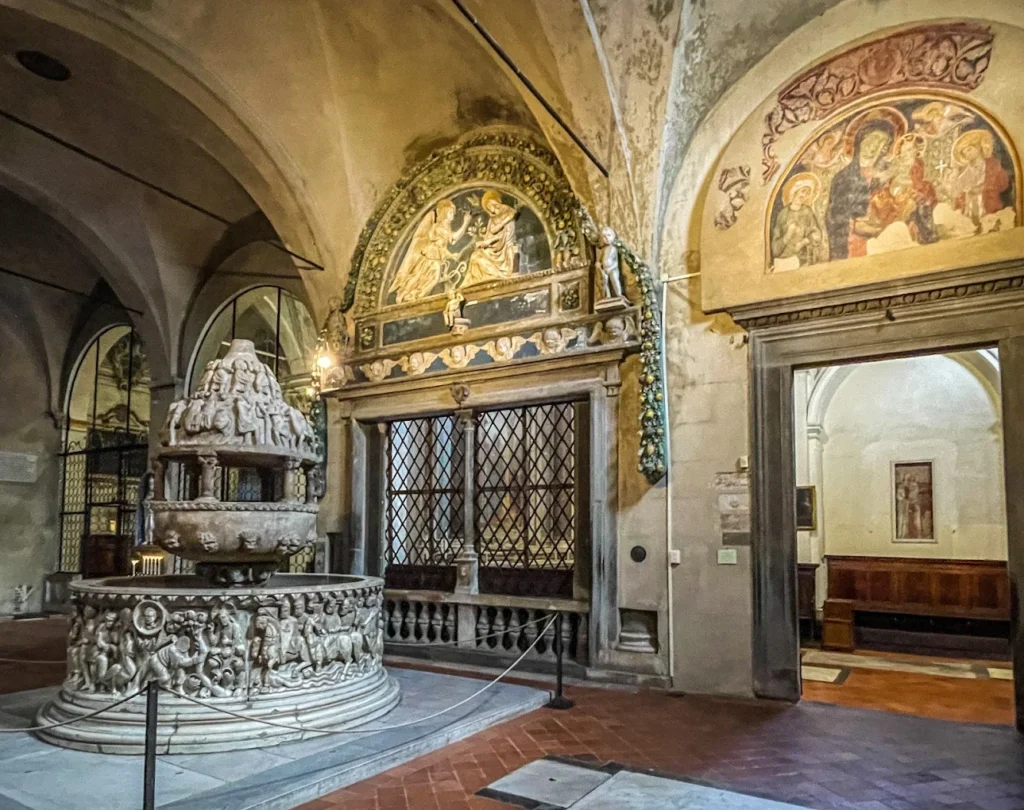
Ancient columns, many repurposed from earlier Roman structures, line the main nave and create continuity between classical antiquity and the medieval church. In addition, the 12th-century baptismal font stands out as it is decorated with detailed carvings that depict various biblical scenes.
The Chapel of Santa Zita, which is dedicated to Lucca’s patron saint, is another important highlight. It houses her preserved body and remains a place of local devotion. Finally, the crypt area is a quieter and more contemplative space within the basilica, allowing visitors to experience a more reflective side of the building’s religious atmosphere.
Gli affreschi e le opere d’arte imperdibili
The Basilica di San Frediano is also home to an impressive collection of frescoes and artworks spanning several centuries. This is one of the best places to view religious artwork in the city of Lucca.
Artistic highlights
The basilica is home to the frescoes of Amico Aspertini from the 16th century. In addition, the medieval mosaic on the façade, which depicts the Ascension, stands out as one of the most striking religious artworks in all of Tuscany.
Furthermore, you can find a range of sculptural elements inside that reflect Lombard influences.
Why these artworks matter
- They illustrate the transition from medieval to Renaissance art
- They reflect Lucca’s religious and cultural importance
- They provide insight into local artistic traditions
Opening hours and information for the visit
You can plan a visit to the Basilica di San Frediano Lucca easily, especially if you keep a few practical details in mind.
Basic visitor information
- Opening hours: Typically 09:30–18:00, though these may vary by season or for religious services
- Entrance fee: Around €4 per person *reduced rates for children and large families may apply
- Location: Piazza San Frediano, within Lucca’s historic centre
Essential tips to follow
- Visit early morning or late afternoon to avoid crowds
- Allow at least 30–45 minutes for a relaxed visit
- Dress modestly, as it is still an active place of worship
- Combine your visit with nearby attractions for a more efficient walking itinerary
The Basilica of San Frediano in the context of Lucca
The Basilica di San Frediano forms part of Lucca’s wider historical and cultural landscape and remains one of the city’s most important religious landmarks.
Its role in Lucca
- One of the city’s oldest churches
- A key stop on religious and historical itineraries
- A symbol of Lucca’s medieval identity
Nearby attractions
Just a short walk away, Piazza dell’Anfiteatro is built on the remains of an ancient Roman amphitheatre, and its unique oval shape still reflects its historical origins, making it one of Lucca’s most distinctive squares.
Nearby, the Guinigi Tower stands out as one of the city’s most iconic landmarks, renowned for its unusual rooftop garden and the panoramic views it offers over Lucca.
Meanwhile, the well-preserved Lucca city walls provide the perfect setting for a leisurely walk or bike ride, allowing you to enjoy a different perspective of the city in a relaxed and scenic way.
Opinions and reviews of visitors
The Basilica di San Frediano Lucca captivates everyone who visits, particularly those interested in history, religious art, and quieter attractions away from the busiest tourist routes.
What visitors usually appreciate
- The unique golden façade, which stands out even among Lucca’s many churches
- The peaceful and authentic atmosphere inside
- The connection to Santa Zita and local religious tradition
- The central location, close to other major sights
Possible drawbacks for some travellers
- A small entry fee may apply, depending on the current ticket policy
- Signage and interpretation inside can feel limited if you want detailed explanations
- It can become busier during weekends and the peak summer months
| Pros | Cons |
|---|---|
| Unique façade | Entry fee may apply |
| Rich history | Limited information panels |
| Central location | It can be busy in peak season |
Come and explore the Basilica di San Frediano in Lucca
The Basilica di San Frediano is one of Lucca’s most beautiful cultural experiences. From its early Christian origins to its Romanesque architecture and Renaissance artworks, it has a meaningful and engaging look into the city’s past.
To make the most of your stay, choosing accommodation in the historic centre gives you easy access to Lucca’s churches, piazzas, towers, and walls. Lucca Apartments and Villas offers a comfortable base for exploring the city at your own pace, making it easier to enjoy Lucca and its surrounding attractions from morning through to evening.