Although Lucca might be one of Tuscany’s lesser-known cities, it is the most charming and well-preserved city, known for its Renaissance walls, quiet streets, and layered history.
At the heart of this historic centre, you will find one of its most recognisable landmarks, the Amphitheatre Lucca. Unlike traditional ruins, this site has evolved into a vibrant public square, blending Roman architecture with modern-day life.
This guide explores everything you need to know about the Lucca Amphitheatre, including its origins, what you can see, visitor information, and nearby attractions.
Introduction to the Lucca Amphitheatre
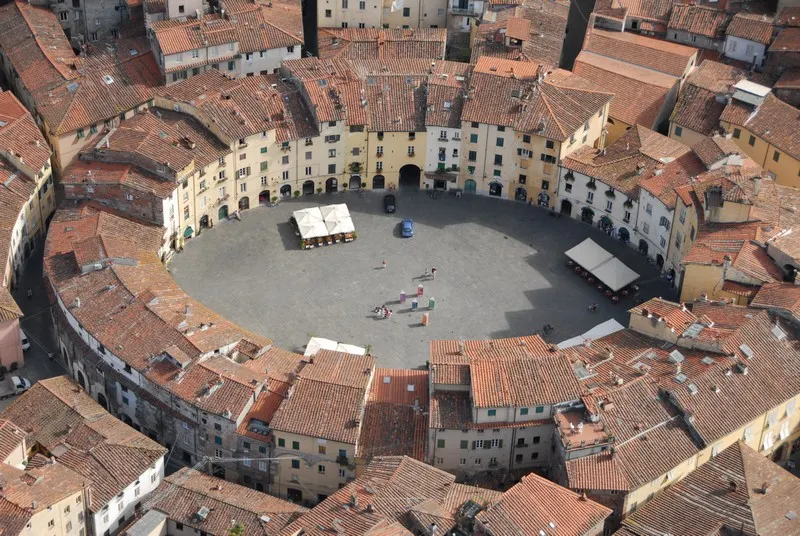
The Amphitheatre in Lucca, now known as Piazza dell’Anfiteatro, is a remarkable example of how ancient structures can be adapted over time. Built in the 2nd century AD during the Roman Empire, the original amphitheatre once hosted gladiator games and public spectacles.
Today, the square’s oval shape still reflects the original Roman design, making it one of the most distinctive piazzas in Italy.
Key facts about the Lucca Amphitheatre
| Feature | Detail |
|---|---|
| Construction period | 2nd century AD |
| Original use | Gladiator games and events |
| Capacity | Estimated 10,000 spectators |
| Current function | Public square with cafes, shops, and homes |
| Shape | Elliptical (original Roman layout preserved) |
In our opinion, what makes the Roman Amphitheatre Lucca particularly unique is that it is not a standalone ruin. Instead, medieval houses were built directly on top of the original structure, integrating it into the city’s daily life.
Why it’s a must-see
- One of the best-preserved Roman amphitheatre layouts in Italy
- Fully integrated into a living urban environment
- Easily accessible within Lucca’s historic centre
- Surrounded by restaurants, boutiques, and local businesses
History of the Roman Amphitheatre in Lucca
The history of the Roman Amphitheatre in Lucca reflects the evolution of the city itself. Originally constructed outside the Roman city walls, it later became part of Lucca’s urban expansion.
Timeline of the amphitheatre
- 2nd century AD – Construction under Roman rule
- 5th–6th centuries – Decline of the Roman Empire; amphitheatre abandoned
- Middle Ages – Structure repurposed; stones reused for other buildings
- 11th–14th centuries – Houses built within and around the ruins
- 19th century – Restoration led by architect Lorenzo Nottolini
What to see and do in Piazza dell’Anfiteatro
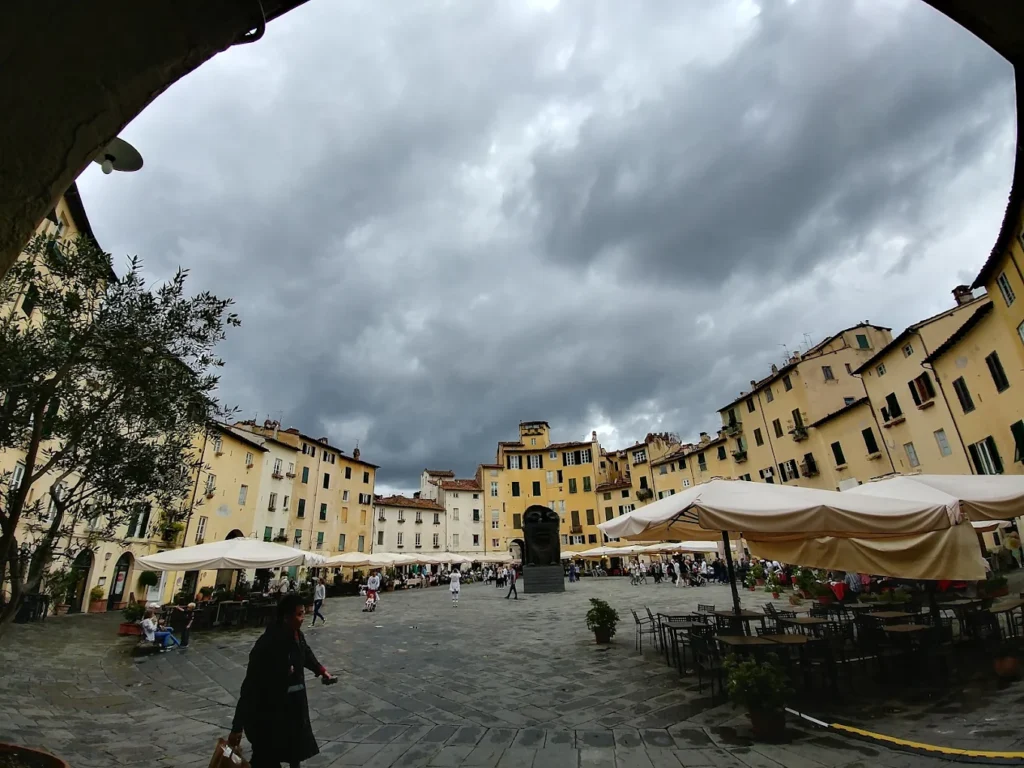
The Amphitheatre Lucca is not a museum site in the traditional sense. Instead, it is a public square where history, architecture, and local culture come together.
Must-see highlights
Walk the full perimeter of the oval square to appreciate its unique shape better. Next, pass through the four original entrances, which once served as Roman access points.
Then, take in the colourful façades, as buildings from different periods create a layered aesthetic.
Finally, head to elevated viewpoints, where some cafés offer views across the entire piazza.
Things to do in the amphitheatre in Lucca
- Sit at a café and observe daily life
- Explore artisan shops and local boutiques
- Visit early morning or late evening for fewer crowds
- Take photos from different angles to capture the oval geometry
Best times to visit
| Time of day | Experience |
|---|---|
| Early morning (7–9am) | Quiet, ideal for photography |
| Midday | Lively, busy |
| Evening | Relaxed atmosphere, dining and socialising |
Visitor information: tickets, hours, and how to get there
One of the advantages of the Lucca Amphitheatre is that it is completely free to access.
Entry details
- Tickets: Free
- Opening hours: Open at all times (public square)
- Accessibility: Flat terrain, suitable for walking
How to get there
The Amphitheatre in Lucca is located in the historic centre, which is pedestrian-friendly.
From Lucca train station:
- 15–20 minute walk
- Follow signs toward the city centre and Via Fillungo
By car:
- Park outside the city walls (limited traffic zone inside)
- Recommended parking areas:
- Parcheggio Mazzini
- Parcheggio Carducci
Nearby attractions and restaurants
The Lucca Amphitheatre is ideally located for exploring other major sites in the city.
Nearby attractions
- Guinigi Tower: Famous for trees growing on top
- Lucca Cathedral (San Martino): Romanesque architecture and historic artworks
- Via Fillungo: Main shopping street
- City walls of Lucca: 4 km of walkable Renaissance fortifications
Restaurants near the amphitheatre
Casual dining
- Local trattorias offering Tuscan dishes
- Pizza and pasta restaurants with outdoor seating
Mid-range options
- Traditional Tuscan cuisine (ribollita, bistecca alla fiorentina)
- Wine bars featuring regional wines
What to try
- Farro soup (typical Tuscan dish)
- Wild boar ragù
- Local olive oil and wines from the Lucca hills
Our tips for dining in the area
This is a lively, central location, which makes it easy to explore nearby sights. In addition, you can enjoy the wide variety of dining options available throughout the square. Take advantage of the outdoor seating, which adds to the overall experience.
However, expect higher prices compared to less central areas in Lucca, and keep in mind that the area can become crowded during peak hours.
Why the Lucca Amphitheatre is a must-visit
The Amphitheatre Lucca represents how a city can evolve while preserving its past. The transformation from a Roman arena into a lively square makes it one of the most distinctive landmarks in Tuscany.
What sets the Lucca Amphitheatre apart is its usability. It is not a place you simply observe; it is a place you experience. From morning walks to evening dinners, it forms part of daily life in Lucca.
Final checklist before you go
- Plan your visit early or late in the day
- Combine with nearby attractions
- Allow time to sit and enjoy the atmosphere
- Explore beyond the square into the surrounding streets
Stay in Lucca with comfort and convenience
To fully experience the charm of the Roman Amphitheatre Lucca, and the wider city, staying nearby makes all the difference. Being within walking distance allows you to enjoy quieter moments in the square and explore Lucca at your own pace.
Lucca Apartments and Villas offers a range of accommodation options in prime locations, making it easier to access important landmarks like the Amphitheatre in Lucca, the Torre delle Ore, and historic streets.
Choosing the right base allows you to experience Lucca beyond the main sights, with the flexibility to explore early mornings and evenings when the city feels more authentic.
Come and explore Lucca and see the breathtaking Roman Amphitheatre for yourself.