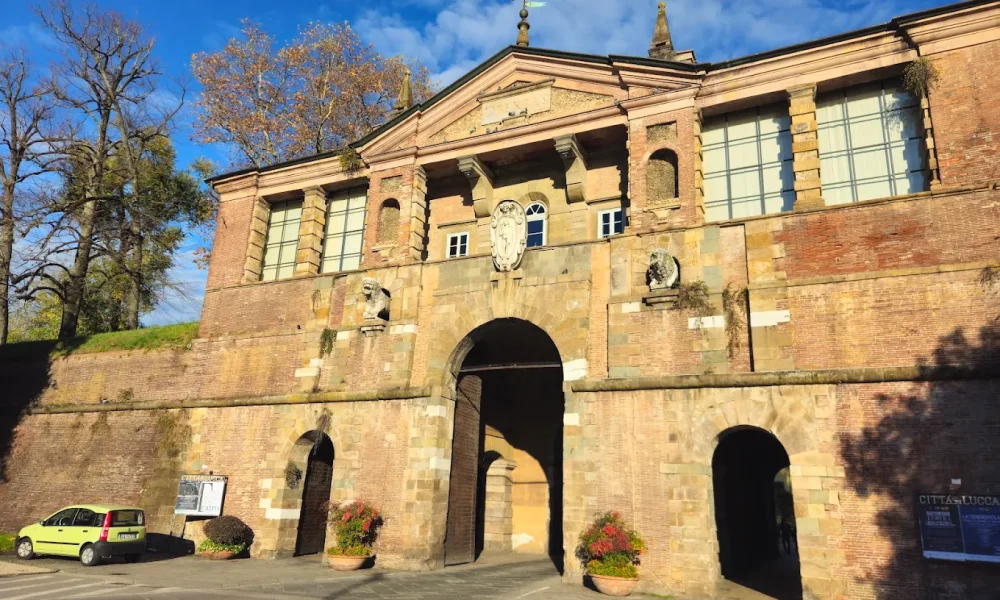
Among the most important entrances to the city is the Porta San Pietro. It’s one of the principal gateways to enter the old centre. Today, it remains both a historic monument and one of the most practical entry points into the old town.
This guide explores the history of Porta di San Pietro, its architectural significance, how to reach it, and the most interesting facts you should know.
Porta San Pietro and its history
The current Porta San Pietro dates mostly from the 16th century, when the Republic of Lucca modernised its defences to withstand artillery warfare.
The city walls, rebuilt between 1544 and 1650, formed a 4.2-kilometre defensive ring with massive earth-filled bastions, thick ramparts, and monumental gates. The southern entrance became especially important because it connected Lucca with major trade routes leading to Pisa and Florence.
Earlier medieval gateways stood in the same location, but Renaissance engineers replaced them with stronger, wider entrances designed to support defensive structures and allow better control over access to the city.
Over time, the gate evolved from a military checkpoint into an architectural landmark, maintaining its historic presence even after the walls lost their defensive function in the 19th century.
Today, the surrounding walls are one of Italy’s most unique elevated parks, with wide tree-lined promenades used daily by locals and visitors for cycling and strolling.
What is Porta San Pietro?
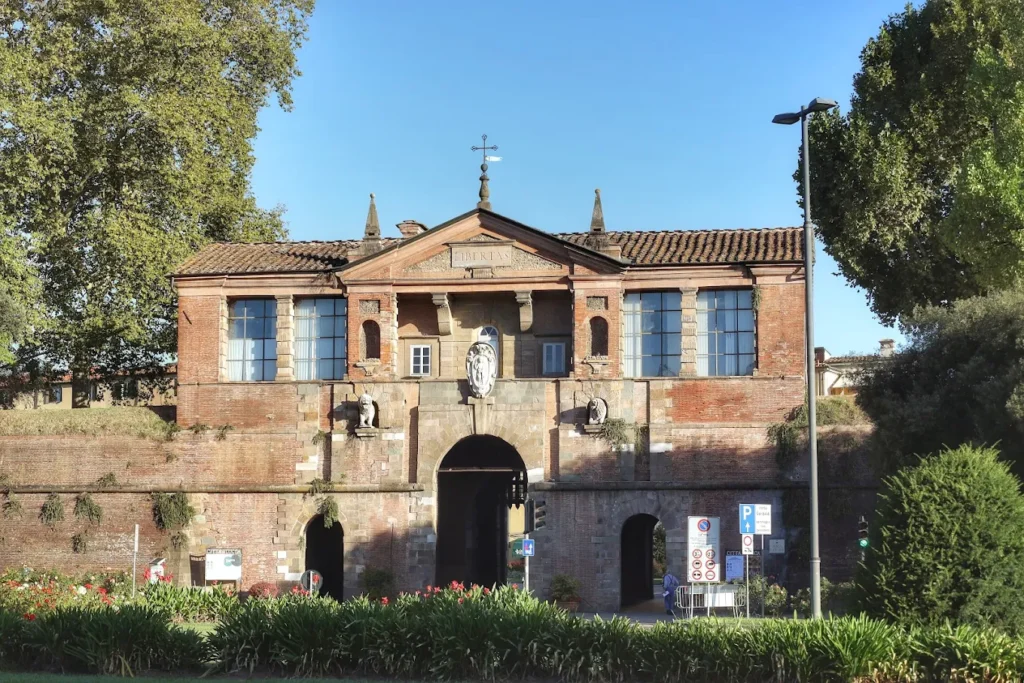
Porta San Pietro is a fortified gateway integrated into Lucca’s Renaissance city walls. The gate features multiple passageways that historically allowed controlled access for both pedestrians and carts entering the city.
Typical Renaissance defensive features can still be clearly recognised today. The gate is built with thick stone walls designed for protection, while the chambers above the arches allowed soldiers to watch over the entrances. This allowed for clear sightlines to monitor anyone approaching the city.
At the same time, architects designed the structure to appear visually impressive, using carefully balanced proportions and decorative stone details that reflected the city’s status and pride.
Unlike many historic gates across Europe that were removed during periods of urban expansion, Porta Santa San Pietro has remained largely intact.
Visitor checklist
- Observe the multiple archways and symmetrical design
- Look for defensive openings and upper guard areas
- Explore the surrounding wall promenade for elevated views
Where is Porta San Pietro located?
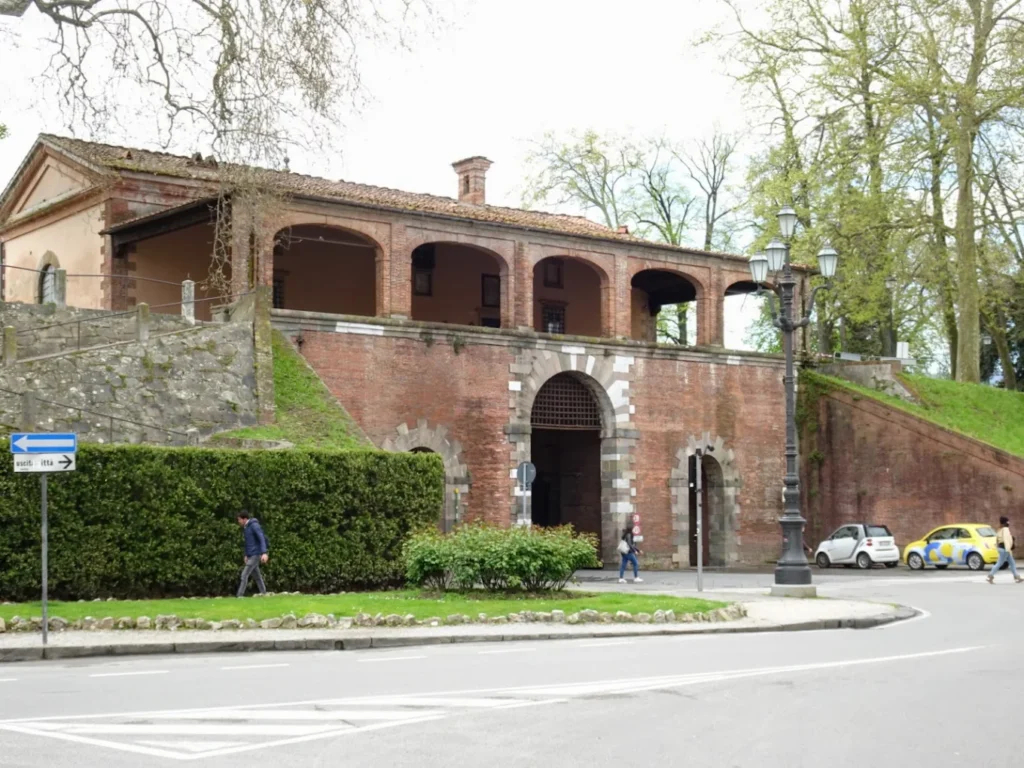
Porta San Pietro Lucca is located on the southern section of the historic walls, making it one of the most convenient entrances when arriving by train or bus. The gate stands only a few minutes’ walk from Lucca railway station, which makes it a great starting point for many walking tours of the historic centre.
Approximate walking distances include:
- 5 minutes from Lucca railway station
- 8 minutes to Piazza Napoleone
- 10 minutes to Via Fillungo, the city’s main shopping street
- 12 minutes to Piazza dell’Anfiteatro
Because of its proximity to transport hubs, Porta di San Pietro is often considered the most practical entry gate.
How to visit Porta San Pietro in Lucca
The Porta San Pietro is freely accessible at all times. You can also explore the gate by walking or cycling along the elevated green promenade that circles the historic centre. Bicycle rentals are widely available near the station and throughout the city.
Suggested short itinerary
1. Enter the historic centre through Porta San Pietro
Begin your visit by walking through the monumental arches of Porta San Pietro, one of the main southern entrances to the walled city.
2. Reach the walls via the nearby access ramp
Just a short distance from the gate, you will find one of the gentle ramps that lead up to Lucca’s famous Renaissance walls. These wide, gradual paths were originally designed for military access and today make it easy for both pedestrians and cyclists to reach the elevated promenade.
3. Walk along the tree-lined promenade toward Bastione San Paolino
Once on the walls, follow the shaded path bordered by rows of trees and green lawns. You’ll have great views over both the historic centre and the surrounding modern town. The route toward Bastione San Paolino is particularly scenic and usually less crowded than other sections.
4. Descend near Piazza Napoleone
At Bastione San Paolino, take one of the access points back down into the historic centre. From here, you will be only a short walk from Piazza Napoleone, one of Lucca’s main squares, known for its open space, historic buildings, and regular cultural events.
5. Continue exploring Lucca’s historic streets and squares
From Piazza Napoleone, continue your walk through the charming streets of the old town. Head toward Via Fillungo for shopping, or Piazza dell’Anfiteatro for its unique oval layout.
Tip: If you have time, we suggest visiting the Lucca Cathedral for stunning Romanesque architecture within the city.
Interesting facts and secrets of Porta San Pietro
Lucca’s defensive walls are among the best preserved Renaissance fortifications in Europe, largely because the city was rarely involved in large-scale military conflicts after their construction. As a result, the gates and the surrounding bastions survived intact while many other Italian city gates were dismantled in the 19th century.
Interesting facts about the Porta San Pietro
- The surrounding bastions can reach thicknesses exceeding 30 metres due to the earth-filled defensive structure behind the outer walls.
- Internal guard corridors once allowed soldiers to move between defensive positions without being exposed.
- Historical documents occasionally refer to the gate using alternative names, including variations such as Porta Santa San Pietro.
- Today, the walls surrounding the gate form part of a green park spanning over 40 hectares, attracting hundreds of thousands of visitors annually.
Visit Porta San Pietro
If you are arriving in Lucca, Porta San Pietro is often the first encounter with the city’s remarkable Renaissance heritage.
Its historical importance, architectural character, and convenient location make it an essential stop on any walking itinerary.
Staying close to the walls allows you to experience Lucca’s historic atmosphere at any time of day. Choosing centrally located accommodation with Lucca Apartments and Villas makes it easy to reach Porta San Pietro Lucca. Explore the city comfortably on foot, and enjoy one of Tuscany’s most beautifully preserved historic destinations.