When you walk through the streets of Lucca, the sweet aroma of aniseed and raisins wafts from historic bakeries.
Buccellato, the iconic sweet bread of Lucca, is a sweet treat loved by tourists and locals.
This guide explains what Buccellato di Lucca is, from its history to where to find the best loaves, plus an authentic Buccellato di Lucca recipe you can recreate at home.
Buccellato di Lucca
Buccellato di Lucca is a traditional sweet bread, for which locals have a saying: “Chi viene a Lucca e non mangia il buccellato è come non ci fosse mai stato” (“Anyone who comes to Lucca and doesn’t eat buccellato is as if they’ve never been there”).
This sentiment perfectly captures how integral this buccellato bread is to Lucca’s identity.
Origins of Buccellato bread
The history of Buccellato bread dates back to ancient Rome, though the sweet version we know today comes from the Renaissance.
The name derives from the Latin word “buccella,” meaning morsel or bite. For ancient Romans, buccellatum was a round loaf made from a crown of individual rolls, often distributed as rations to soldiers.
The first documented reference to Buccellato in Lucca appears in a 1485 legal document detailing the trial of a woman accused of murdering her husband with poisoned buccellato.
Created by confectioners around 1450 for nobles, buccellato cake evolved from a luxury item to an everyday staple. Traditionally, it was associated with the Feast of the Exaltation of the Holy Cross in September, when families would purchase fresh loaves after attending mass.
Key ingredients of the traditional Buccellato cake
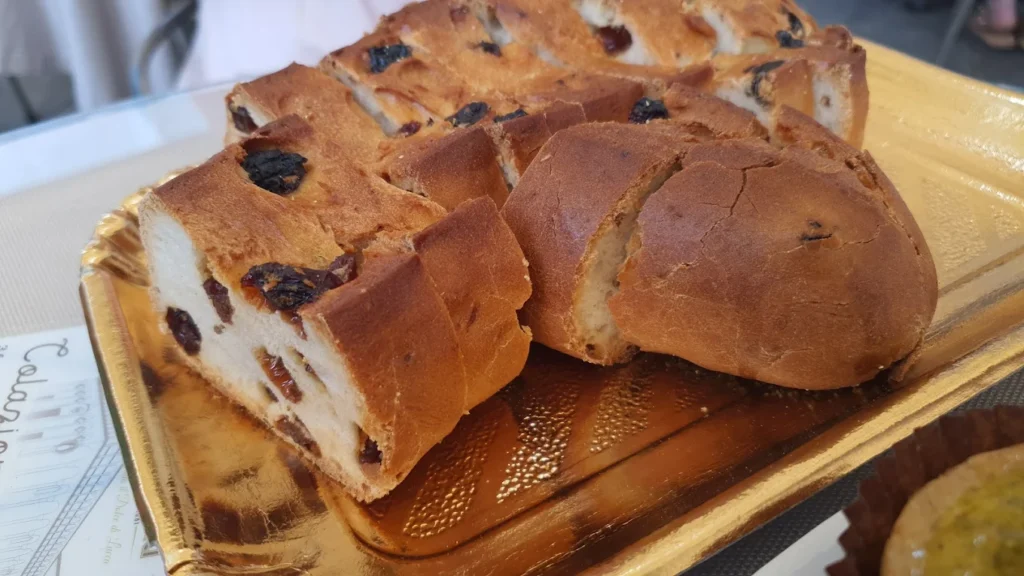
The authentic Buccellato cake recipe has simple ingredients. Traditional Lucchese bakers take pride in using no animal fats (eggs, milk, butter) or vegetable oils.
Essential ingredients:
The secret to exceptional Buccellato di Lucca lies not just in the ingredients, but in the sourdough starter. At Pasticceria Taddeucci, the most famous producer, they’ve maintained and refreshed the same mother yeast for five generations since 1881.
Optional variations found in some recipes:
- Eggs (in richer, more modern versions)
- Butter or milk (not traditional, but some home bakers add these)
- Walnuts (added during the Christmas holidays)
- Anise liqueur (for enhanced flavour)
- Egg white and sugar glaze (for shiny crust)
Where to find the best Buccellato in Lucca
When searching for authentic Buccellato bread in Lucca, you’ll find it sold in most bakeries throughout the city.
Pasticceria Taddeucci (since 1881)
Located in Piazza San Michele in the heart of Lucca’s historic centre, Pasticceria Taddeucci is acknowledged as producing the finest Buccellato di Lucca.
Other notable bakeries
While Taddeucci holds the crown, other Lucchese bakeries produce excellent buccellato cake, each with subtle variations:
Pasticceria da Sara creates a version with very finely chopped raisins and a softer crust, while various other bakeries around the historic centre sell fresh buccellato daily.
Tips for buying buccellato:
- Purchase in the morning when loaves are freshest
- Don’t be surprised if bakeries sell out by afternoon
- Buy from shops where you observe locals making purchases
- The bread should feel slightly firm but not hard when fresh
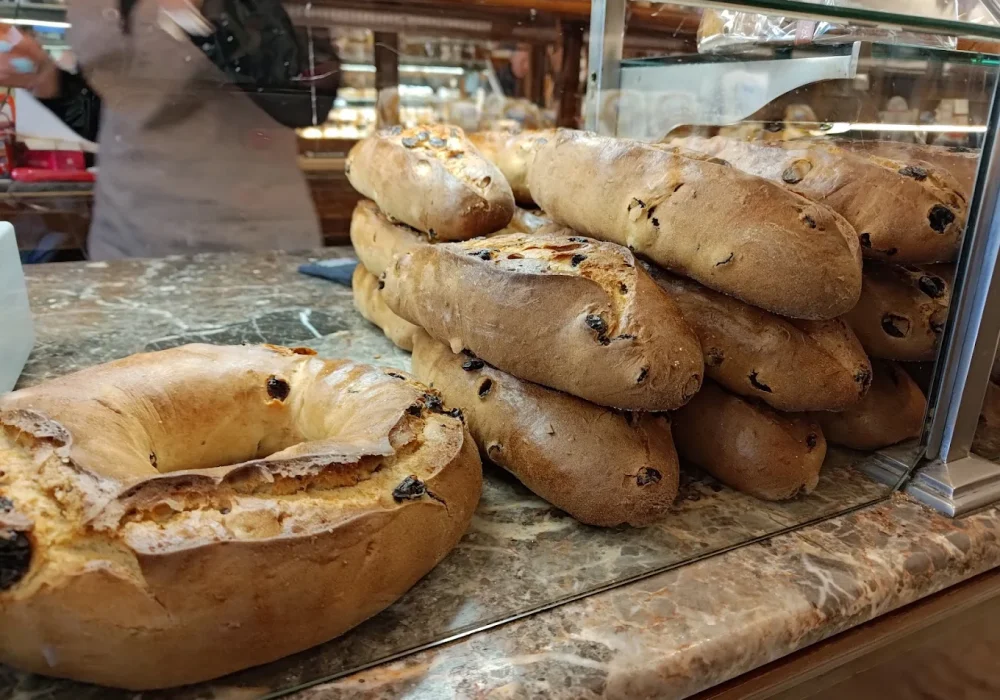
- Ring-shaped versions are more traditional than loaves
- Expect to pay €4-6 for a small loaf
Authentic Buccellato di Lucca recipe
This Buccellato di Lucca recipe produces a traditional ring-shaped loaf with the characteristic aniseed aroma and plump raisins.
Ingredients (makes one large ring):
- 500g bread flour or Type 00 flour
- 250ml warm water (plus extra if needed)
- 100g granulated sugar
- 2 tablespoons aniseed
- 150g raisins, soaked in warm water for 30 minutes
- 15g fresh yeast (or 7g dried active yeast)
- 1 teaspoon salt
- 2 tablespoons anise liqueur (optional)
For the glaze:
- 1 egg white, lightly beaten
- 2 tablespoons sugar dissolved in 2 tablespoons water
Method:
Step 1 – Activate the yeast: Dissolve the yeast in 100ml of the warm water with 1 teaspoon of sugar. Let stand for 10 minutes until foamy. If it doesn’t foam, your yeast is inactive—start again with fresh yeast.
Step 2 – Make the dough: In a large bowl, combine the flour, remaining sugar, salt, and aniseed. Make a well in the centre and add the activated yeast mixture. Gradually add the remaining warm water, mixing until a soft dough forms. Knead for 10 minutes until smooth and elastic.
Step 3 – Add raisins: Drain the soaked raisins thoroughly and pat dry. Flatten the dough and distribute the raisins evenly across the surface. Fold and knead gently to incorporate them throughout.
Step 4 – First rise: Place the dough in a lightly oiled bowl, cover with a damp cloth, and let rise in a warm place for 1-2 hours until doubled in volume.
Step 5 – Shape: Punch down the dough and roll it into a long log approximately 50cm long. On a greased baking sheet, form the log into a ring, pinching the ends together securely. Place a small ovenproof bowl in the centre to help maintain the shape during rising.
Step 6 – Second rise: Cover and let rise for 30-45 minutes until puffy.
Step 7 – Glaze and bake: Preheat oven to 180°C (350°F). Brush the surface with the egg white, then with the sugar syrup. Bake for 35-40 minutes until golden brown, and the loaf sounds hollow when tapped on the bottom.
Step 8 – Cool: Transfer to a wire rack and cool completely before slicing.
How to enjoy and serve Buccellato
Buccellato is versatile, enjoyed throughout the day in various ways by Lucchesi families.
Breakfast: Slice fresh or day-old buccellato bread and toast lightly. Spread with butter and serve alongside milky coffee or cappuccino.
Afternoon snack: Enjoy fresh slices with a cup of tea or coffee. In Lucca, it’s common to see people having buccellato mid-afternoon in cafés.
Dessert: Serve slices of buccellato cake with Vin Santo, Tuscany’s beloved dessert wine. The sweet wine complements the aniseed perfectly. Alternatively, serve with fresh seasonal fruit.
Visit Lucca to taste the Buccellato cake
Buccellato di Lucca connects you directly to Lucca’s culinary heritage.
Ready to experience authentic Buccellato cake in the city where it was born?
Lucca’s medieval walls, stunning churches, and charming piazzas await you. Make your visit to Lucca complete with the perfect accommodation with Lucca Apartments and Villas to find your ideal base for exploring this enchanting Tuscan city.
The right accommodation lets you live like a local and start each morning with fresh Buccellato di Lucca and a stroll along the ancient walls.