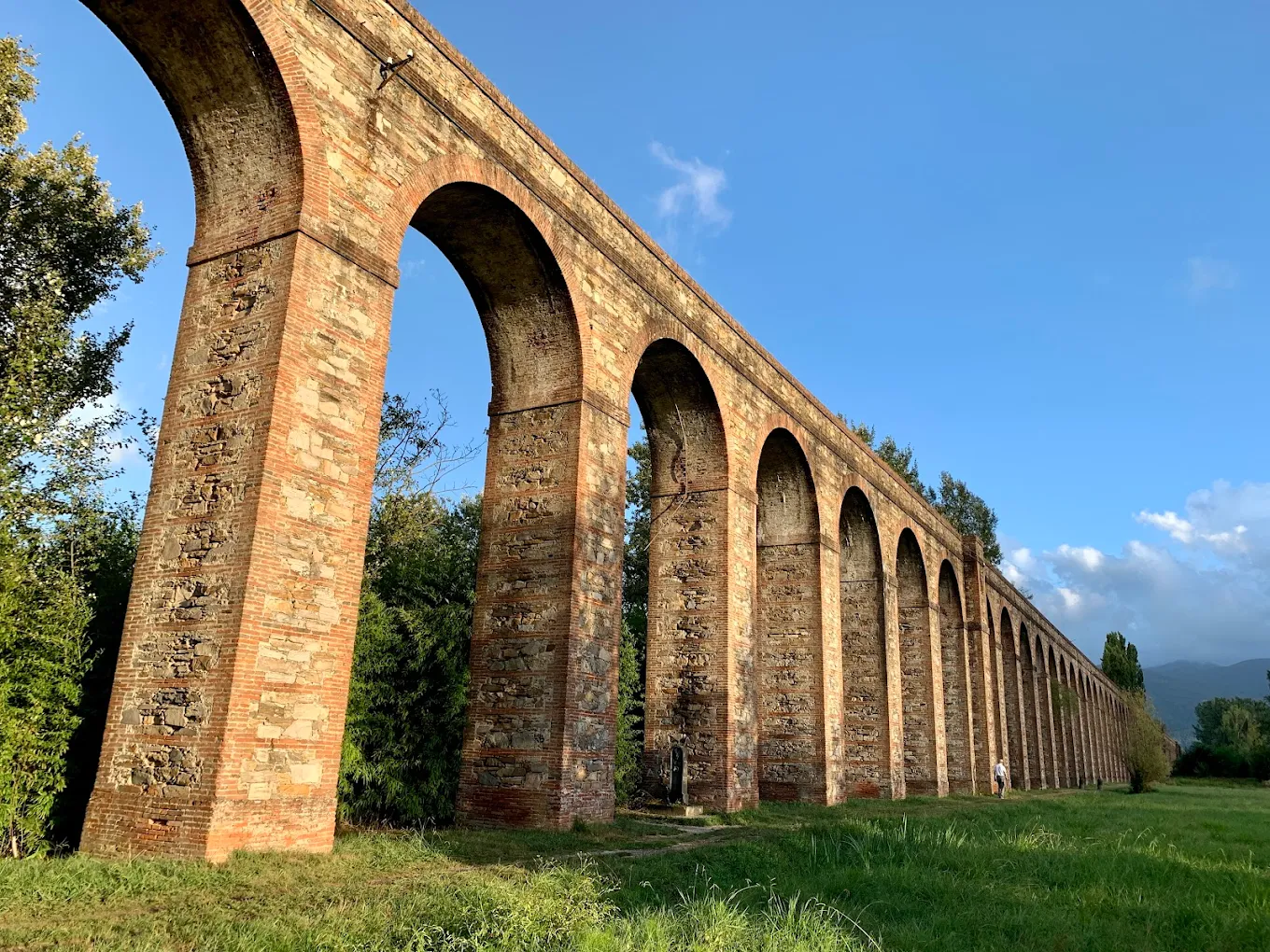
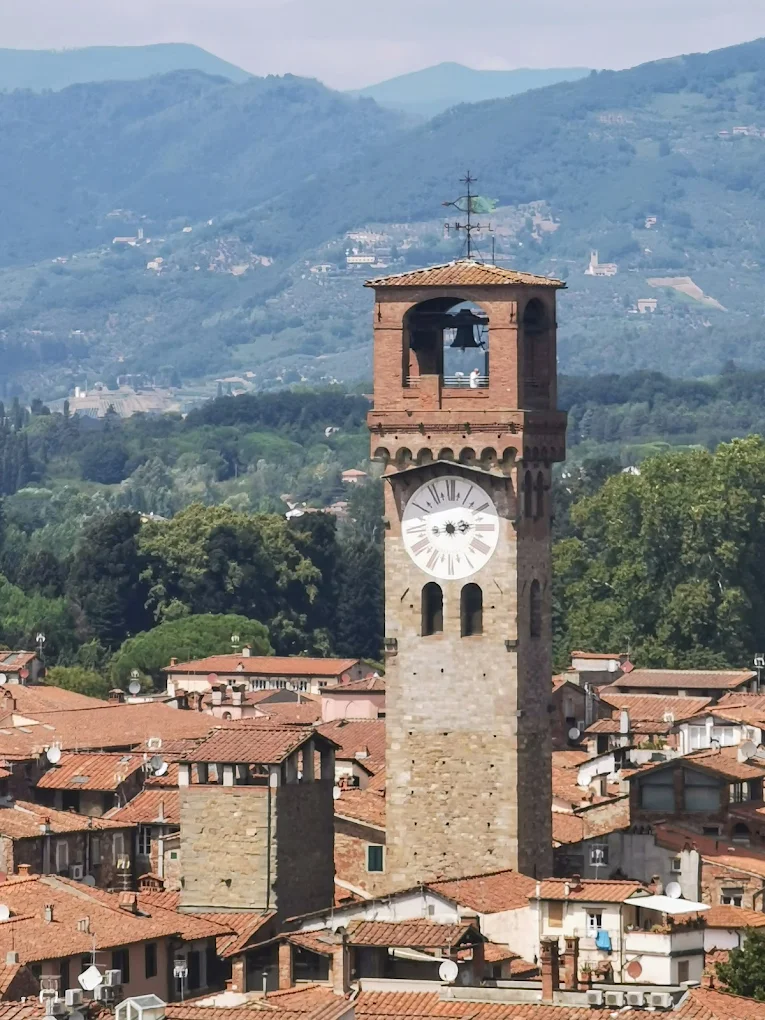
Lucca is one of the few Italian cities that never tore down its walls. They still circle the historic centre, and the gates set into them are the only way in or out.
This article covers the history of Porta San Donato, its architecture, what’s located nearby, and how to reach the walls. By the end you’ll know exactly why this corner of the city is worth a visit.
Porta San Donato in Lucca
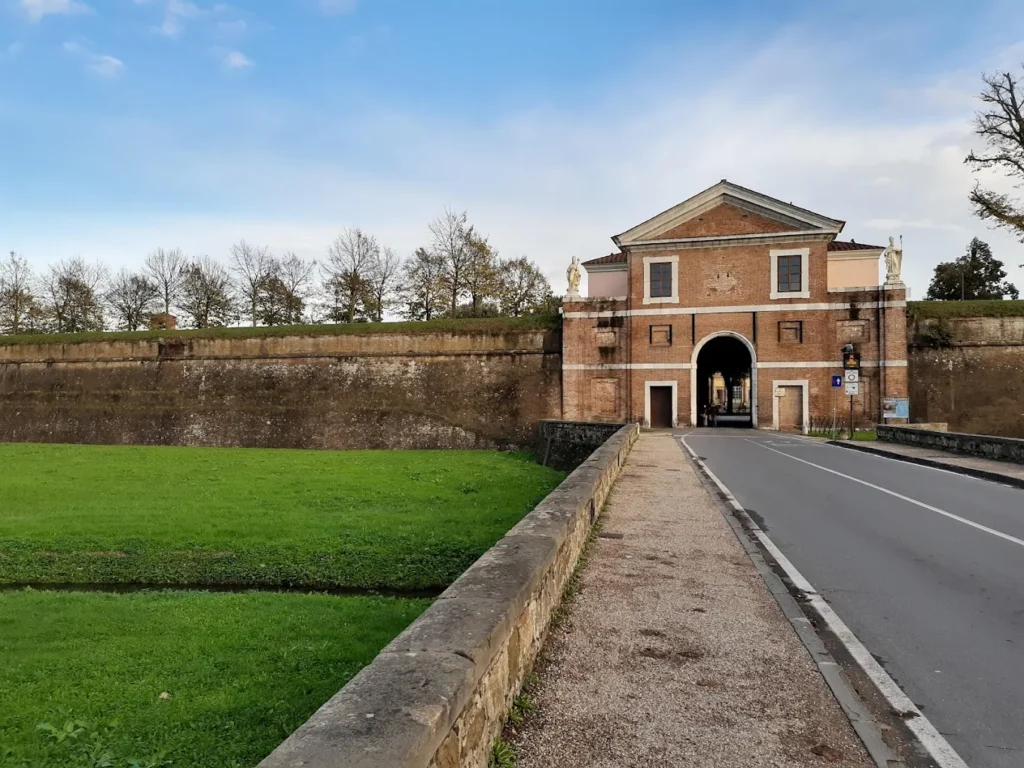
Porta San Donato sits on the western side of the city, facing ancient Luni, and takes its name from San Donato, a patron saint long associated with this part of the fortifications. There are actually two structures that share the name.
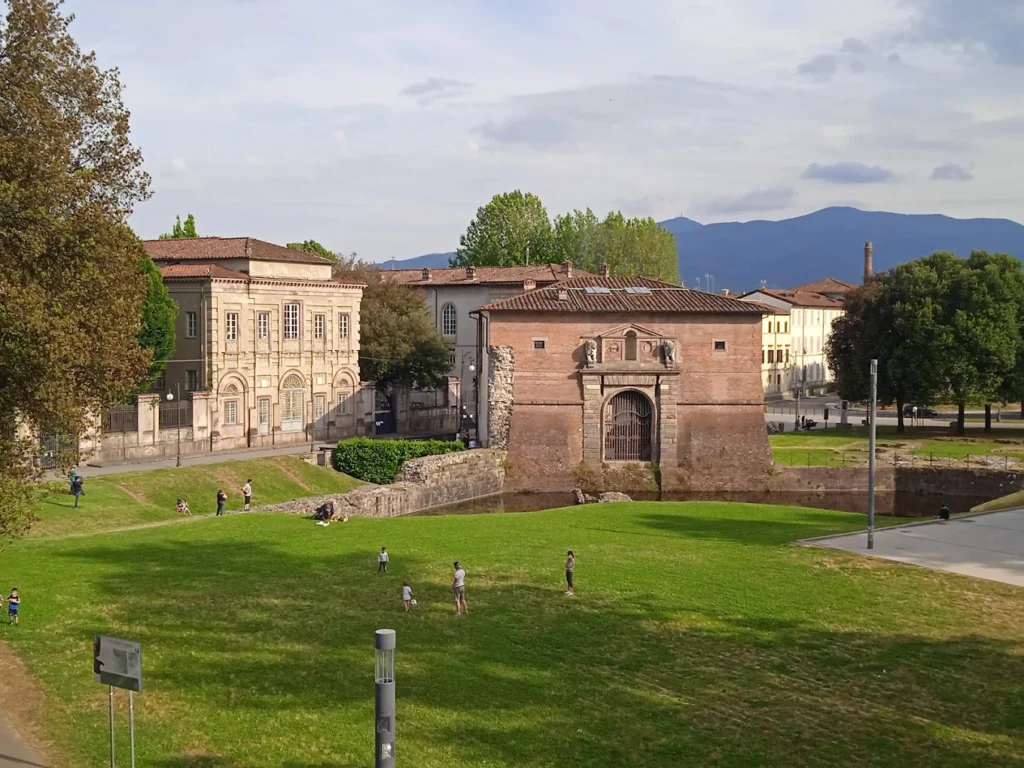
The older gate stands in Piazzale Verdi and is the tourist information office. The newer one, the gate most people mean when they say Porta San Donato Lucca, sits a little further out at Piazzale San Donato.
- Location: Western side of Lucca’s walls, Piazzale San Donato, 55100
- Faces: West, historically towards Luni
- Original Roman gate: One of Lucca’s four founding gates
- Current Renaissance gate: Built 1629 to 1639
- Cost to walk the walls: Free
- Walls total length: Just over 4 km
History of Porta San Donato in Lucca
Lucca was founded as a Roman colony in 180 BC, and the original city had four gates set into limestone walls. The west gate, pointing towards Luni, became known as Porta San Donato. So this position has been the western way into Lucca for well over two thousand years.
Builders rebuilt the gate several times as the city grew, and you can still see it today. An earlier version, designed by Vincenzo Civitali, went up in 1590 in what is now Piazzale Verdi.
The newer Porta San Donato Lucca was begun by the architect Muzio Oddi in 1629 and finished around 1639. It was pushed further out from the older gate because the city had grown and the walls were rebuilt on a wider line.
This is one of only three original Renaissance gates in the walls, alongside Porta San Pietro and Porta Santa Maria. The fortification was built as a defence against regional threats, including the powerful Medici family in nearby Florence.
No army ever attacked the walls in war. In the 1820s, Duchess Maria Luisa of Bourbon handed the walls to her court architect Lorenzo Nottolini, the same engineer who created the Acquedotto del Nottolini. He stripped out the cannons and planted the avenues with trees.
The design and architecture of the gate
The newer Porta San Donato is built in brick, with marble strips and panels. It had a drawbridge, a portcullis, and statues of the patron saints San Donato and San Paolino watching over the entrance.
| Feature | Detail |
|---|---|
| Wall height | Around 12 metres |
| Base width | Up to 30 metres |
| Total perimeter | Just over 4 km |
| Bastions | 11, of varying shapes |
| Curtain walls | 12 connecting sections |
| Main build period | 1545 to 1650 |
Did you know?
The date carved on the San Donato coat of arms reads MDCVIIIL, which is wrong. The correct Roman numerals for 1642 should read MDCXLII. This error has survived for nearly four centuries.
What can I see near the Porta San Donato?
Porta San Donato Lucca is in the western half of the old city, which is quieter and less rushed than the area around the amphitheatre. A short walk takes you to some of Lucca’s best churches and squares.
- Piazza Napoleone: Lucca’s largest open square, home to the Palazzo Ducale and the Teatro del Giglio opera house, is a few minutes east on foot.
- Basilica di San Frediano: One of the oldest churches in the city, with its gleaming mosaic façade. The 6th-century basilica and the body of patron saint Santa Zita sit a short stroll away.
- Via San Paolino: A handsome street lined with shops and cafés that runs back into the centre.
- The walls themselves: Step straight up and walk the tree-lined ramparts in either direction.
While you’re in the area, take advantage of some great nearby day-trips. The grand gardens and outdoor hedge theatre of Villa Reale di Marlia lie about 8 km out, and make an easy half-day escape.
How to get to the wall
- On foot from the centre: From Piazza dell’Anfiteatro, head down Via Fillungo, turn onto Via San Paolino, then follow the signs west. It’s a 10 to 15 minute walk.
- From the train station: Lucca’s station sits just outside the southern walls. Walk in through the nearest gate and head northwest across the centre, roughly 15 to 20 minutes.
- By car: You can park near Piazzale Verdi, but the historic centre is mostly closed to traffic, so park outside the walls and walk in.
- Accessing the ramparts: Ramps and steps lead up to the wall walk at several points near the gate. The path along the top is flat, wide, and suitable for pushchairs and bikes.
Tip: The gate area also hosts the Lucca Walls Infopoint and the Porta San Donato Castle. Opening hours run from 10:00 am to 4:30 pm in winter and 10:00 am to 6:00 pm in summer. The route has QR-code panels that help blind and visually impaired guests get around independently, and the wall walk accommodates visitors with motor disabilities.
What are some interesting facts about the old city centre of Lucca?
- The Roman west gate on this spot has pointed travellers towards Luni for more than 2,000 years.
- The old gate in Piazzale Verdi had the last guillotine execution in Italy in 1845.
- The San Donato coat of arms displays a famous Roman-numeral typo that authorities have never corrected.
- Lucca is the only Italian city to keep its full circuit of walls intact and walkable.
- The same architect who reshaped these walls, Lorenzo Nottolini, also designed Lucca’s civic squares and public works across the city.
Explore the Porta San Donato in Lucca
Porta San Donato is the western threshold of a city that has guarded this exact spot since Roman times. Walk under it, climb onto the ramparts, and you get the whole of Lucca’s story in a single afternoon.
The best way to really enjoy Porta San Donato Lucca is to stay close enough to wander the streets. At Lucca Apartments and Villas, we offer carefully chosen apartments and villas inside and around the historic centre, from elegant palazzo flats within the walls to countryside retreats in the surrounding hills.
Browse our collection of places to stay across Lucca and Tuscany and book your holiday today.