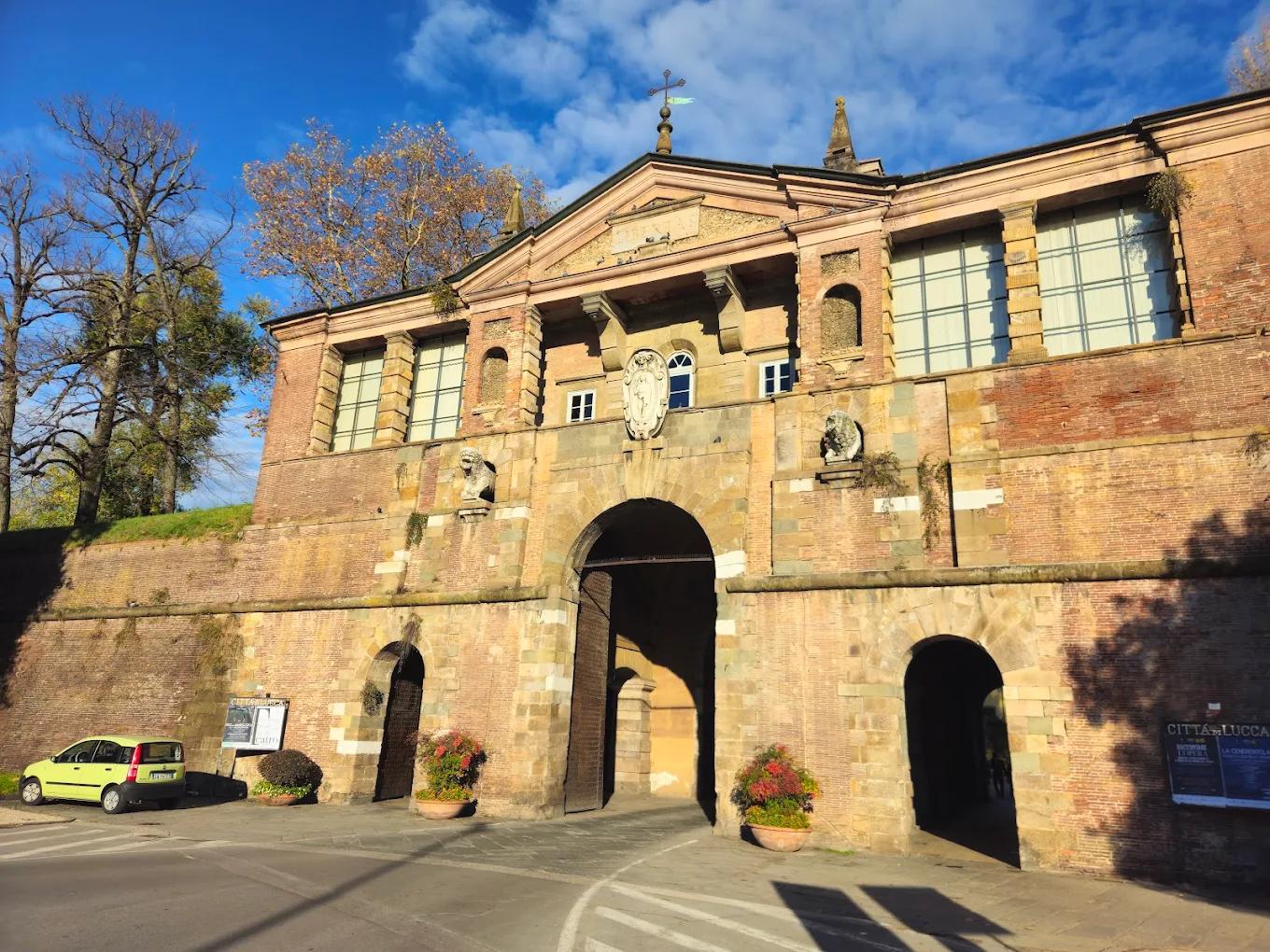
Porta Elisa Lucca is the most recent addition to Lucca’s famous circuit of Renaissance walls.
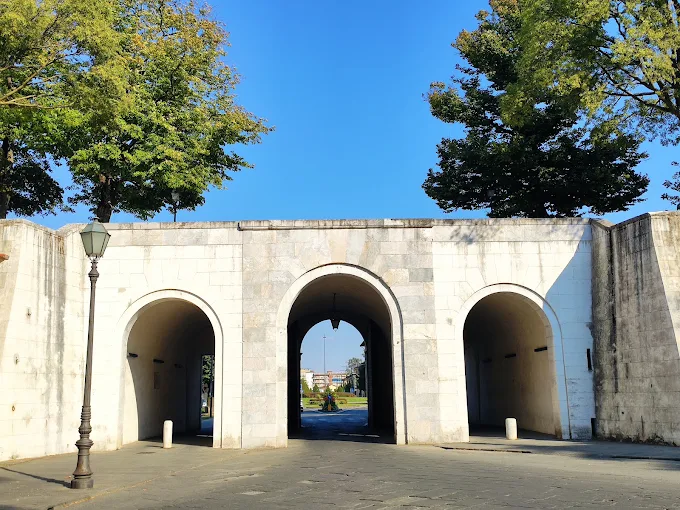
Built in 1810 during the Napoleonic era, when Elisa Bonaparte, Napoleon’s sister, briefly ruled the city, this gate is completely different from its Renaissance neighbours.
Most people who visit Lucca walk the entire circuit of city walls without fully understanding the gates themselves. The walls get all the attention; the gates become afterthoughts. Join us as we explore the beautiful gates of Porta Elisa.
Understanding the historical context of Porta Elisa Lucca
To understand Porta Elisa, it helps to first understand Lucca’s unusual relationship with defensive architecture.
Unlike many Italian cities, Lucca kept its medieval walls and continued to strengthen and maintain them during the Renaissance and the centuries that followed. As a result, the city entered the 19th century with a complete defensive circuit that was already several centuries old.
When Elisa Bonaparte arrived in Lucca in 1805, she became the ruler of a city surrounded by these historic walls. Elisa was Napoleon Bonaparte’s younger sister, and he appointed her and her husband, Felice Baciocchi, to rule the Principality of Lucca. At the time, the walls still played an important role in the city’s layout.
Elisa wanted to improve the eastern entrance to Lucca and create a more direct connection between the historic centre and the road leading towards Florence. This led to the construction of Porta Elisa.
Elisa’s rule was relatively short. She remained in power until 1814, when Napoleon’s empire collapsed, and political control across Europe changed. Traditional rulers returned to many areas, including Lucca.
Architectural features of Lucca Porta Elisa
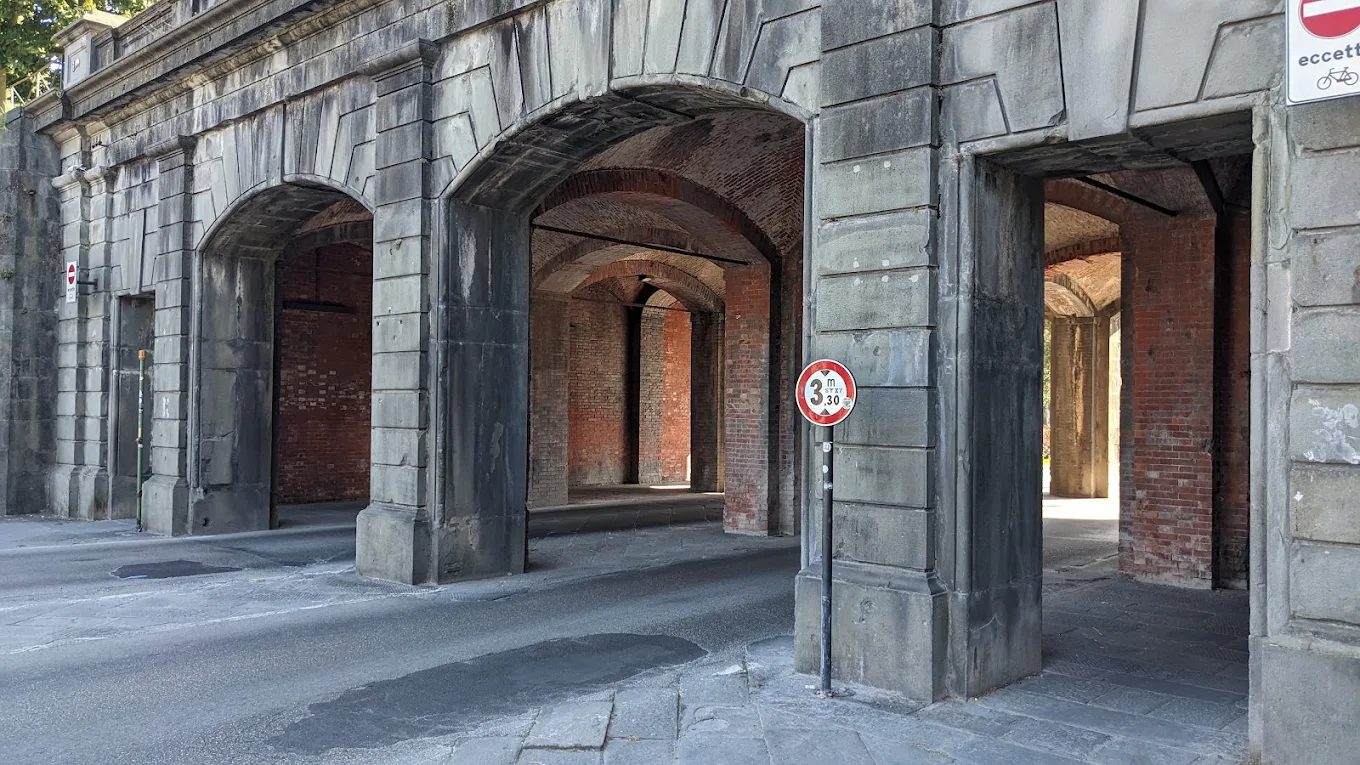
Walk up to Porta Elisa, and you immediately notice architectural differences from the other four main gates.
One of the most interesting features of Lucca Porta Elisa is the way it connects with the surrounding city walls. Earlier Renaissance gates can feel more like defensive structures built into the walls, while Porta Elisa blends more naturally into the wider design. Built around 1810, it reflects a changing approach to the city walls, which were increasingly seen as part of Lucca’s urban landscape rather than simply a system of military defences.
Comparing the six gates of Lucca
| Gate name | Period built | Architectural style | Key features |
|---|---|---|---|
| Porta San Pietro | 1565–1566 | Renaissance military | Defensive design, vaulted passage and fortified structure |
| Porta Santa Maria | 1592–1594 | Renaissance military | Large fortified entrance, statues and defensive features |
| Porta San Donato | 1628–1629 | Renaissance military | Symmetrical design, fortified passage and defensive features |
| Porta Elisa | 1811 | Neoclassical | Classical proportions, elegant design and ornamental details |
| Porta Sant’Anna (Porta Vittorio Emanuele) | 1910–1911 | Early 20th-century civic | Simple design with two vehicle entrances and the Lucca coat of arms |
| Porta San Jacopo | 1930–1931 | 20th-century civic | Modern entrance designed to improve access to the Serchio valley |
Walking the walls at Porta Elisa
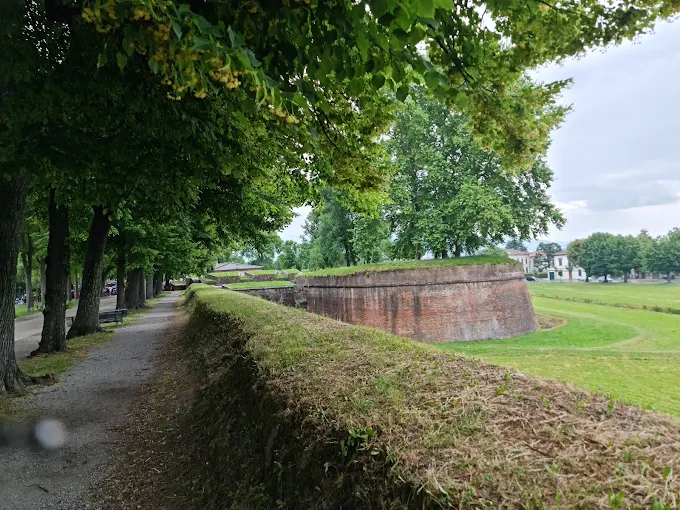
- City walls: The complete circuit is around 4.2 km long, with the walls averaging 12 metres high. Today, the walls form a tree-lined public promenade.
- Walking time: A full circuit takes around 45 minutes at a relaxed pace, although many visitors spend longer stopping to enjoy the views and explore the city.
- Porta Elisa: Located on the eastern side of the walls, the gate is around 20 minutes’ walk from the Cathedral of San Martino.
- See both sides: Walk through the gate to admire both its inner and outer façades and see how it connects the historic centre with the surrounding neighbourhoods.
What to see and do near Lucca Porta Elisa
The area around Porta Elisa Lucca has a few attractions worth exploring alongside the gate itself.
- Cathedral of San Martino (Duomo): Located around 15 minutes’ walk southwest of Porta Elisa, the cathedral is one of Lucca’s most important landmarks. It is home to the famous Volto Santo crucifix and features centuries of religious art.
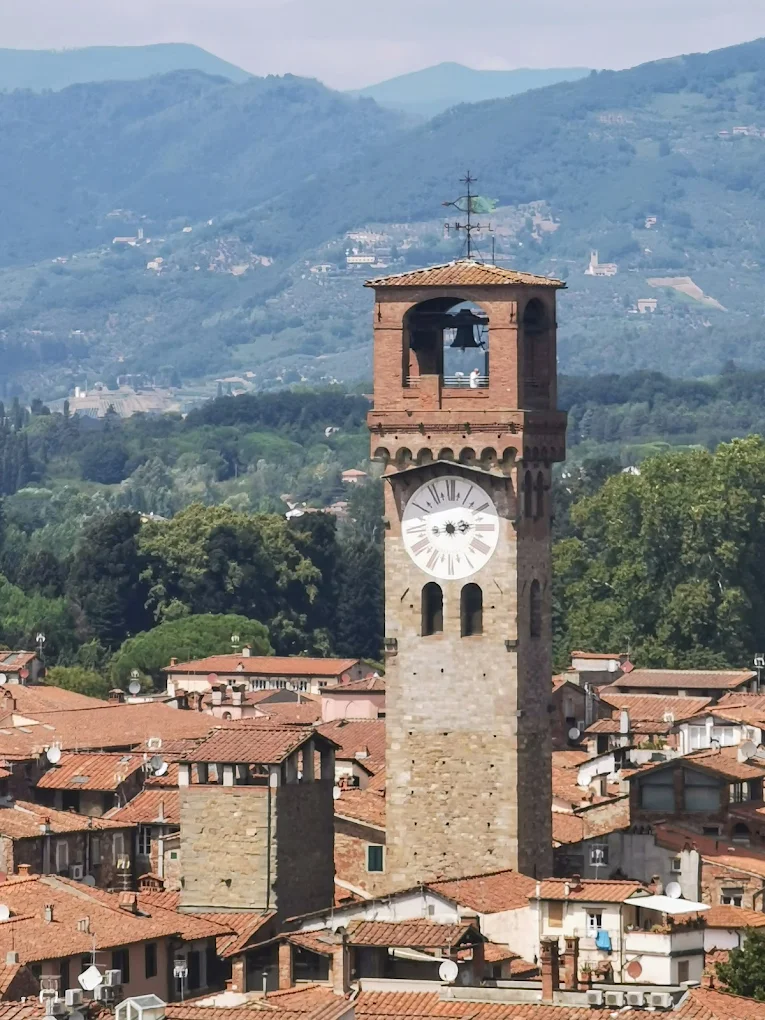
- Guinigi Tower (Torre Guinigi): About 10 minutes’ walk from Porta Elisa, this 14th-century tower is famous for its rooftop garden and panoramic views over Lucca.
- Church of San Francesco: This historic Franciscan church dates back to 1228 and features beautiful artworks and historic architecture. It is around 12 minutes’ walk southwest of Porta Elisa.
- Piazza Anfiteatro: Built around the remains of a Roman amphitheatre, this distinctive oval-shaped square is lined with cafés, restaurants, and historic buildings.
- Roman Amphitheatre of Lucca: You can still see the shape of the ancient Roman amphitheatre in the square. It shows a fascinating glimpse into Lucca’s Roman past.
- Shopping and dining: The streets around Porta Elisa and the historic centre are home to independent shops, boutiques, cafés, and restaurants where you can enjoy local specialities and explore the city at your own pace.
Useful information for visiting Porta Elisa
Porta Elisa is located on the eastern side of Lucca’s historic wall circuit and is free to visit. Because the gate is part of Lucca’s public city walls, you can access it at any time.
For a quieter experience, visit early in the morning before 9 am or later in the afternoon after 5 pm. These times also offer good light for photographs.
Parking directly outside the gate is limited. However, paid car parks are available within about a 5-minute walk. The gate itself is wheelchair accessible, while the city walls have gradual slopes in many areas.
Finally, cafés, restaurants, and shops are located both inside and outside the walls, making it easy to stop for refreshments during your visit.
Planning your visit to Porta Elisa Lucca
Porta Elisa is easy to visit as part of a must-do walk around the centre of Lucca. The gate itself only takes around 15–20 minutes to see, so it is worth combining it with the city’s historic centre, including the Cathedral of San Martino, San Francesco Church, Piazza Anfiteatro, and Guinigi Tower.
A walk along Lucca’s famous city walls is another easy way to include Porta Elisa in your visit. The full circuit is around 4.2 kilometres, and along the way you can see how Porta Elisa differs from Lucca’s older Renaissance gates.
Here’s a simpler, more natural version:
Whether you enjoy history, architecture, or simply exploring Lucca, Porta Elisa is a small but interesting part of the city’s history.
Planning a trip to Lucca? Explore our Lucca accommodation and find the perfect base for discovering the city’s walls, historic landmarks, and hidden gems.